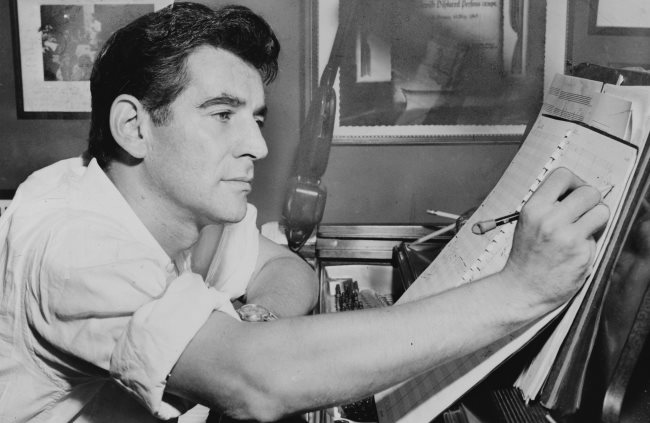
My nephew Ed Lyness spent August performing in a brilliant new show entitled Ada and Bron: The Origin of Love at the Edinburgh Fringe. There were stacks of performances over several weeks, and I mention this because, strangely, all the performances began at 11.00pm! This struck me as a rather uncivilised start time for a show, and then I remembered that the first performance of Bernstein’s opera Trouble in Tahiti also began at 11.00pm. So, Ed’s show joins illustrious company! The lateness of Bernstein’s premiere, at Brandeis University, near Boston on 12 June 1952, was due in no small part to it following on from a lengthy symposium on the state of the arts in America, which Bernstein himself chaired. Readers will be happy to know that, more than 70 years later, there are still regular opportunities for attending lengthy symposiums on the state of the arts both in America and here in the UK!
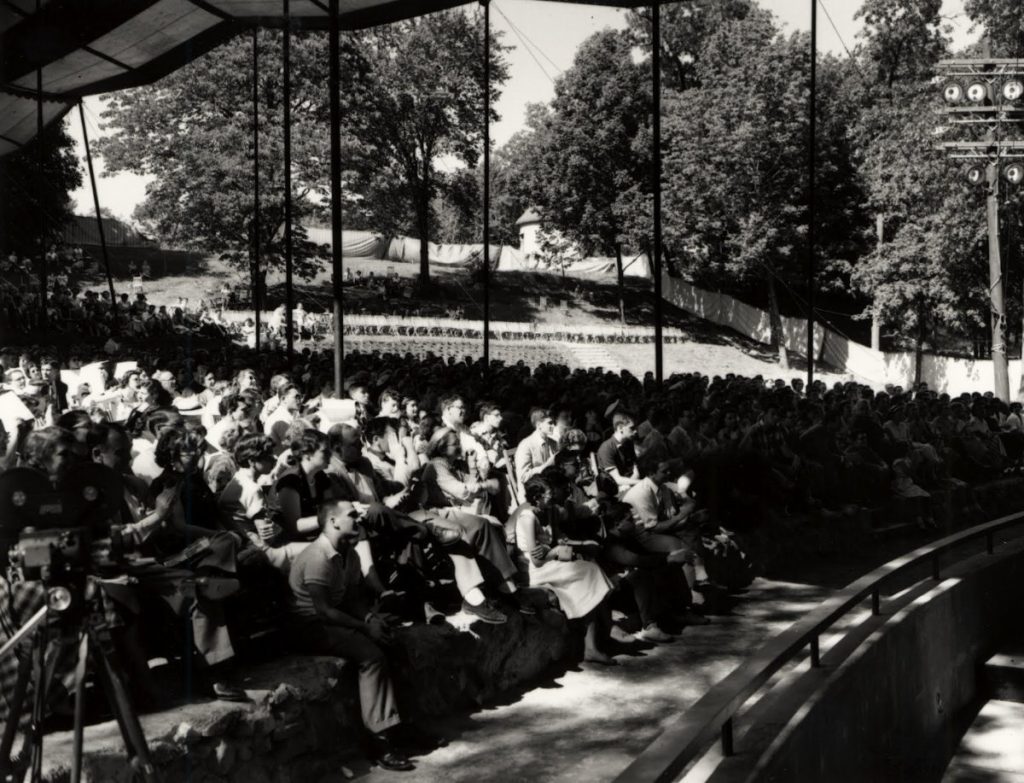
The Origin of Love, which I caught in London earlier this summer, is a hilarious study of strange romances, oddball lovers and weird relationships. Trouble in Tahiti is a troublesome study of the relationship between a married couple who, on the face of it, seem to have it all, but underneath, are unaccountably miserable. The start time of 11.00pm for The Origin of Love presumably paid dividends for a young audience with plenty of time beforehand to ready themselves in the bar. The start time of 11.00pm for Trouble in Tahiti didn’t appear to do the opera any favours, the audience reportedly in a post-symposium funk and ‘a bit over it’ before the show even began. The Origin of Love played to packed audiences in a small theatre with nowhere to hide. Trouble in Tahiti’s three-thousand strong audience were seated in the newly built outdoor Ullman Amphitheater with poor amplification and noises from trees, trains and workman who were still completing the theatre!
By now you might have guessed that Bernstein’s premiere, which opened a new four-day Festival of Creative Arts, was a disappointment. Bernstein had no choice but to put it behind him, and the rest of the festival, which he had organised, and which took place in the shadow of McCarthy’s Communist witch hunt and the first testing of the hydrogen bomb, was a big success. The programming included an historic jazz afternoon, a triumphant first performance of a new American translation of Kurt Weill’s Threepenny Opera, art exhibitions, film screenings, literary discussions and a host of new and recently composed music. Later that summer, Bernstein rewrote Trouble in Tahiti’s final scene, and the opera was performed twice at Tanglewood where it met with considerable success.
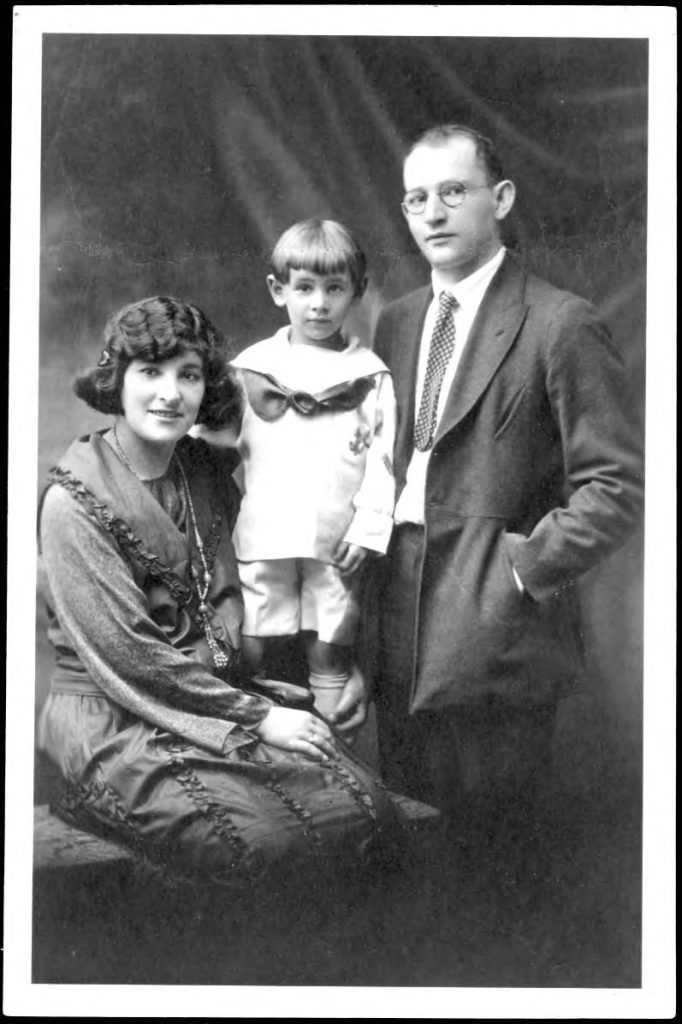
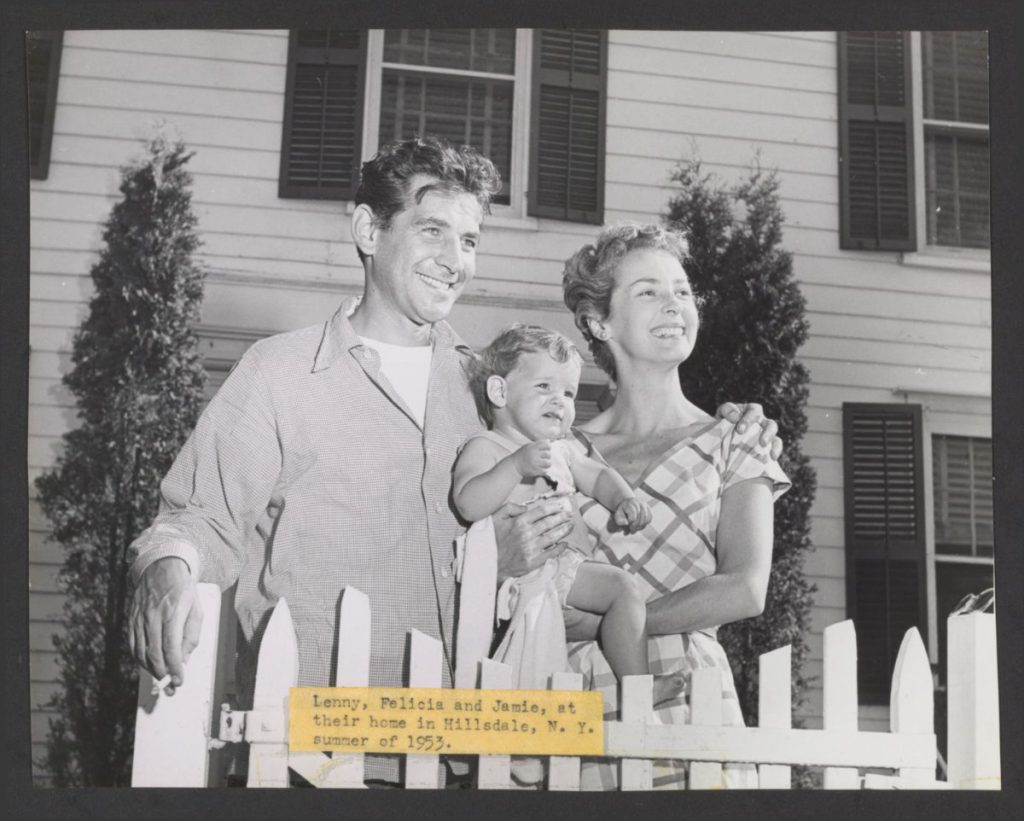
The Origin of Love features much about the origin of love. Trouble in Tahiti features no trouble in Tahiti! Those hoping for tropical island action will be disappointed. The opera is not set on Tahiti – it is, in fact, set in a ‘little white house’ on a reasonably affluent suburban street in a reasonably affluent town that could be anywhere in America. The story’s roots come from Bernstein’s own parents, whose names were Sam and Jennie. Bernstein kept the name Sam, but changed the name Jennie to Dinah, his grandmother’s name and more singable, as any Fats Waller fan will tell you! To complete the cast, Bernstein adds a ‘Greek chorus’ of three – in this case a scat singing jazz trio – who set the scene at the beginning and continue to commentate ironically on how marvellous everything is.
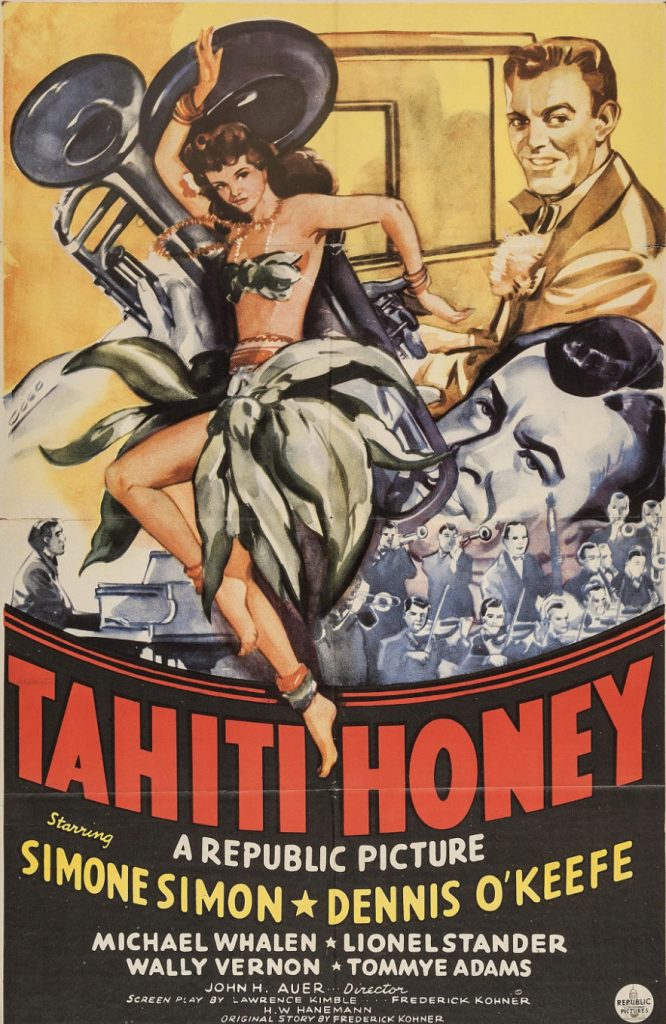
So, what’s with the title Trouble in Tahiti? All is made clear about three quarters of the way through. Dinah, in a hat shop, tells someone about a movie she has seen that very afternoon – Trouble in Tahiti – a south-sea fantasy romance of the sort that Hollywood had begun to get into around that time. The musical South Pacific had arrived just a few years earlier, following on from such cinematic masterpieces as Tahiti Honey from 1943! Summing up the plot, which she finds utterly ridiculous, Dinah gradually works herself up into a bit of an escapist frenzy, recapturing the film’s big number Island Magic, egged on by the ecstatic ‘scat trio’, until she finally breaks out of it and remembers where she is and how she must dash home to cook Sam’s supper!
Other than Sam, Dinah and the ‘scat trio’, no other characters appear in the opera. Sam and Dinah have a son, ‘Junior’, whom they neglect and who we don’t see. Sam speaks on the phone to a business colleague; this seems to be the age of ‘telephone’ operas, what with Menotti’s The Telephone of 1947 and Poulenc’s La Voix humaine appearing in 1959. Meanwhile, Dinah opens up to an imaginary psychiatrist and later, of course, the hat shop assistant.
The theme throughout is the death of love, and Bernstein could hardly have been more openly ruthless in depicting, as he saw it, his miserable childhood and unloving parents. None of this was lost on early audiences, though Bernstein himself, perhaps in an effort to heighten its appeal, went on to describe it as a “light-weight piece… popular song inspired” and derived from musical comedy “or even better the American Musical Theatre”. That last depiction is very true, but Bernstein needn’t have worried over the work’s popularity; with its great numbers, sassy rhythms, fierce energy and the ever-engaging ‘scat trio’ who, as Bernstein instructs “must never stop smiling”, the opera has easily maintained its place in the repertoire. Mind you, it had to wait around 30 years for its UK premiere. Let’s hope The Origin of Love doesn’t have to wait 30 years to reach America!